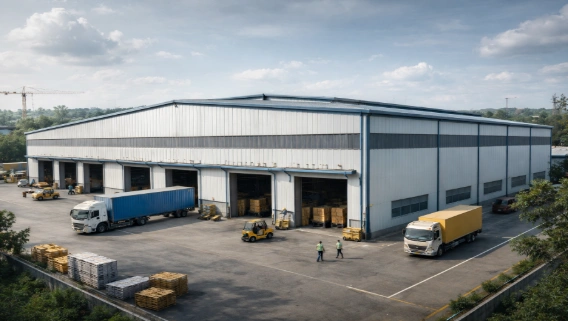
What is a Pre-Engineered Building? Benefits of PEBs
Pre-engineered buildings (PEBs) have become one of the most trusted solutions for industrial and commercial infrastructure in India. In simple terms, a PEB is a steel building whose structural components are designed, fabricated, and quality-checked in a factory before being transported to site for installation.
Unlike traditional brick-and-concrete structures, PEB systems are engineered for precision and speed. Since the main components are manufactured in controlled environments, construction quality remains consistent while project timelines are significantly reduced.
At KMS Technologies, our focus is to deliver robust and cost-effective steel infrastructure using advanced engineering and fabrication practices. This approach helps businesses scale faster while maintaining long-term performance and structural reliability.
What are Pre-Engineered Buildings?
A pre-engineered building consists of primary framing, secondary members, roof and wall cladding, and connection accessories that are designed as one integrated system. Each part is optimized to carry required loads while minimizing steel consumption.
- Main Frames: Primary columns and rafters that support major loads.
- Secondary Members: Purlins and girts that support cladding and distribute loads.
- Cladding: Roof and wall panels for protection and thermal performance.
- Connections: Bolts, bracings, and accessories for secure assembly.
Benefits of PEBs
Pre-engineered structures provide major advantages over conventional construction methods, especially for warehouses, plants, logistics hubs, and production facilities.
1. Cost Effectiveness
Optimized design and factory-controlled production reduce material wastage and labor costs. Faster erection also lowers project overheads and financing burden.
2. Rapid Construction
Since most components are pre-fabricated, on-site work is limited mainly to assembly. This can shorten delivery timelines by up to 30-40% versus conventional methods.
3. Structural Flexibility
PEB systems can be customized for varying widths, eave heights, crane requirements, and future expansions, making them suitable for evolving industrial demands.
4. Durability
With protective coatings, quality steel grades, and proper detailing, PEB buildings offer excellent long-term resistance against corrosion, weather, and operational wear.
5. Low Maintenance Requirement
Engineered cladding and structural systems require less routine maintenance and allow easier inspections, which helps reduce lifecycle costs over the years.
Applications of Pre-Engineering Buildings
PEB structures are ideal for a wide range of sectors due to speed, adaptability, and scale:
- Industrial Sheds and Manufacturing Plants
- Warehouses and Logistics Centers
- Cold Storage and Food Processing Units
- Commercial Buildings and Retail Facilities
- Aircraft Hangars and Large Clear-Span Structures
- Infrastructure and Utility Support Buildings
Conclusion
Pre-engineered buildings combine engineering precision, faster project delivery, and lower ownership costs. For businesses planning modern industrial infrastructure, PEB is a practical and future-ready construction approach.
This page is built as a reusable template. For upcoming blogs, you can keep the same structure and simply replace featured image, title, meta, table of contents, and article text.